
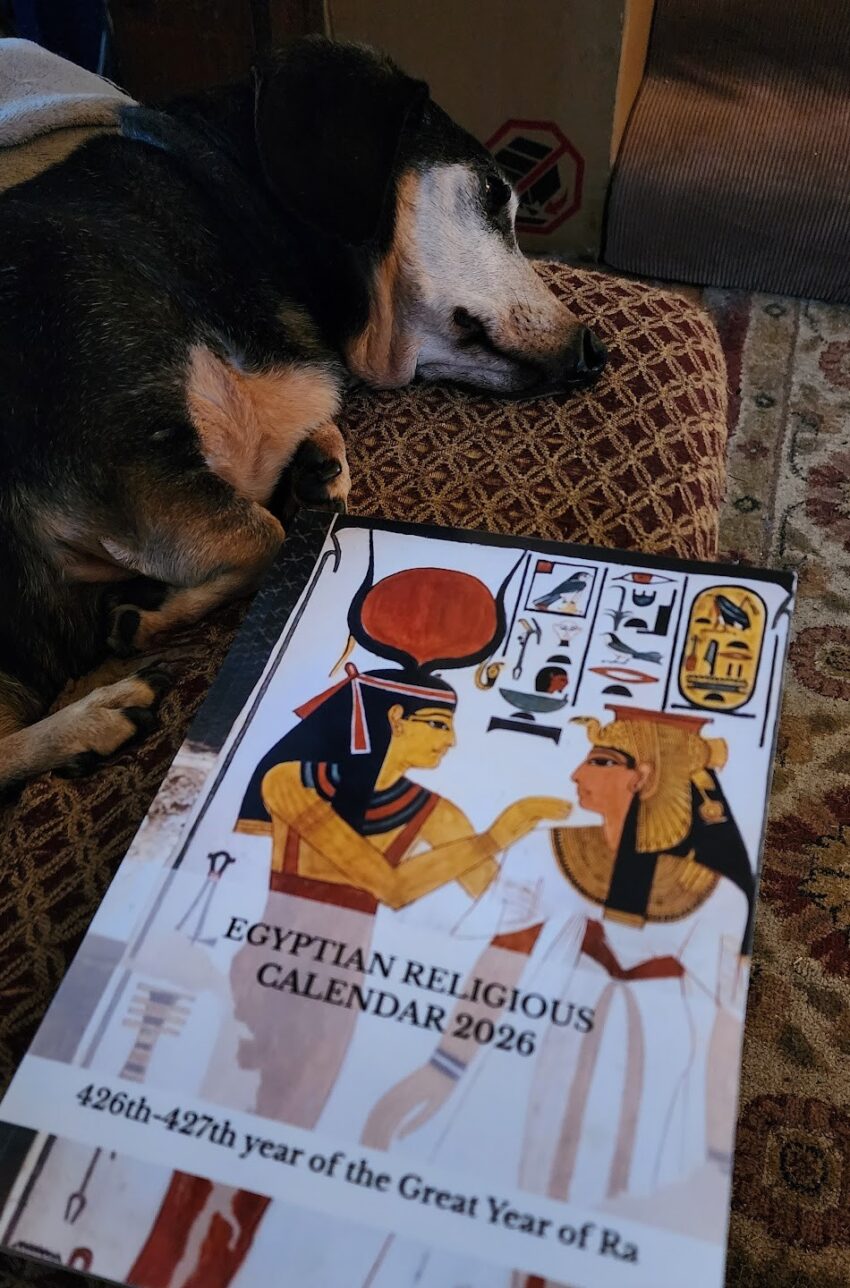
So my Kemet Religious Calendar 2026 by Luigi Tripani arrived yesterday.
I wasn’t sure quite what to expect, but it is a fascinating read (so far).
It touts itself as a reconstruction of religious events from Kemet’s Sothic Calendar Cycle mapped to the 2026 Gregorian Calendar using the ancient festival lists, temple information, as well as various extant papyri.
Of course, the Ancient Egyptians really did not count time in the modern sense as we do today, so there’s clearly room for interpretation.
And obviously, Narmer united Upper and Lower Egypt around 3100 BCE, and you have a culture (and various tribal/state religious changes) over at least a minimum of 3637 years to take into account. (Most normies have this very false monolithic view of Ancient Egypt and truly don’t understand that it was a culture that easily can be viewed as 4000+ years old.
I’ll see if this was worth it, but thankfully it wasn’t too expensive.
Contents include:
Preface
Introduction to the Egyptian Religious Calendar
1 – The Calendars of Ancient Egypt
2 – The Theological Foundations of the Egyptian Religious Calendar
2.1 – Sothis the Divine Architect of Sacred Time
2.2 – The Theological Principle of Participation
2.3 – The Egyptian Religious Calendar as Sacred Order of Time and Living Liturgy for Daily Life
3 – The Civil Calendar
3.1 – Structure and Foundations of the Civil Calendar
3.1.1 – The Sothic Year and the Great Year of Ra
3.1.2 – The Sothic Year and the Decans
3.1.3 – The Sothic Year and the Rhythm of Sacred Time
3.1.4 – The Reckoning of the Heliacal Rising of Sothis and the Great Year of Ra
3.2 – The Daily Gods of the Sothic Year in the Civil Calendar
4 – The Sothis-based Lunar Calendar
4.1 – Structure and Foundations of the Sothis-based Lunar Calendar
4.2 – The Lunar Months and their Presiding Deities
4.3 – The Days of the Lunar Month and their Daily Gods
Egyptian Religious Calendar for the year 2026
Bibliography
Abbreviations and notes